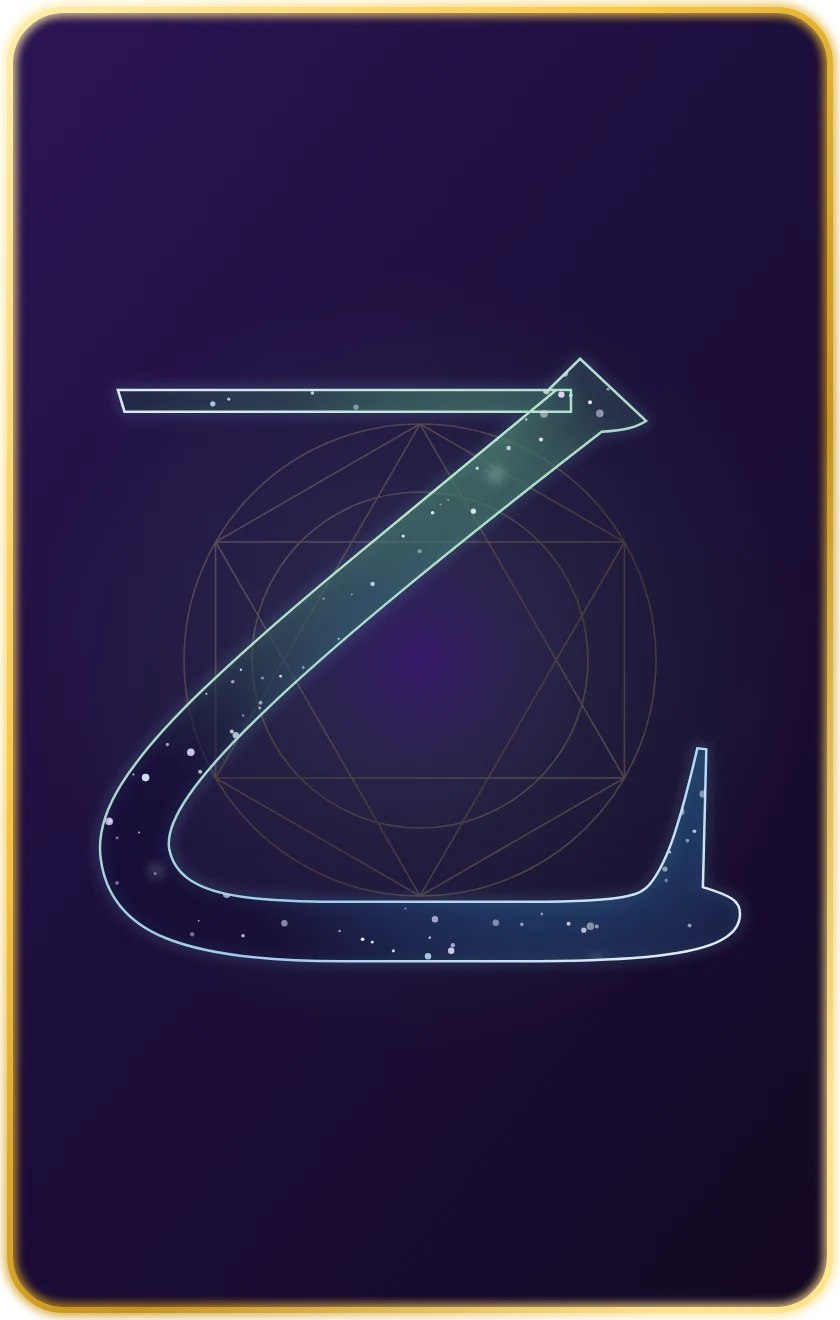
The stem and its image
Yi is the second of the ten heavenly stems, and its classical image is the vine and the grass. This is not the wood of a roof frame, it is the wood that grows close to the ground and along whatever is there.
A vine opposes nothing. It goes round, it coils, it uses whatever it finds in order to climb. Grass lies down flat under the wind, then stands back up once the wind has passed. Both images say the same thing: supple wood leans, and because it leans, it survives the storm that breaks rigid trunks.
From there comes the suppleness of this stem, and its talent for adaptation. Yi changes shape without changing nature. It works with the terrain, it takes the supports available, it waits for the moment rather than forcing it.
From there comes its tenacity too, which is the real ground of the image. Yielding is not giving up. The vine that is torn out grows back, the grass that is mown comes up again. Yi obtains through duration what direct force does not obtain, and it is not discouraged by an obstacle: it goes around it.
From there comes its diplomacy. Wood that lives on its supports learns not to fall out with them. Yi defuses, spares, finds the phrasing that leaves a door open.
And from there comes, finally, the counterpart the image does not hide: dependency. A vine needs a support. Deprived of something to cling to, this stem stays on the ground, and its suppleness can turn into difficulty holding a position by its own means.
Element and polarity
Yi is Wood, in its Yin phase. Its twin is Jia, Wood in its Yang phase: two stems for one single substance.
Polarity names neither a gender nor a rank. Yang and Yin are two phases of one movement, and one is not worth more than the other. They describe two ways for an element to show itself.
With Yi, the Yin phase reads in the image. Wood takes its finest and most mobile form there: a growth that spreads instead of rising, that occupies the gaps, that distributes itself rather than concentrating. Where Yang Wood imposes a direction, Yin Wood follows the lie of the land, ready to come back later over its own tracks.
It is the same plant push, taken from the other end: less visible, harder to get rid of.
Where it hides
A heavenly stem does not appear only in plain sight, at the head of a pillar. Every earthly branch shelters one or more heavenly stems, its hidden stems, which weigh in the reading of the chart without showing at first glance.
Yi hides in three branches, which makes it a quietly very present stem.
In the branch Mao, that of the Rabbit, it stands in first rank: it is the leading hidden stem of that branch.
In the branch Chen, that of the Dragon, it stands in second rank, behind another stem.
In the branch Wei, that of the Goat, it stands in third rank, in the background.
A chart can therefore contain Yin Wood without a single Yi being visible on its four stems. That is faithful to the image: the vine is noticed less than the tree, and is found in more places.
As Day Master
The stem of the day pillar is the Day Master, the reference point from which the whole rest of the chart is read. To be born on a Yi day is to approach the eight characters from the vine.
A Yi Day Master moves by adjustment. It reads the ground before committing, spots the supports, and prefers the road that goes around to the one that confronts. This is not indecision: it is an economy of means. The goal stays, only the path varies.
Its strength appears over time and under trial. This stem takes what would break hard wood, because it accepts bending in the moment. Where others count their breakages, Yi counts its returns.
Its difficulty sits in that same suppleness. By dint of adjusting to what surrounds it, this Day Master can lose sight of what it wanted for itself, or lean so long on one support that it no longer knows how to stand without it. Telling chosen adaptation apart from endured adaptation is the proper work of this stem.
A useful reminder: the Day Master is not the year animal. BaZi is read on eight characters, and the yearly sign is only one of them.
Keywords
- Suppleness
- Adaptation
- Tenacity
- Diplomacy
- Dependency